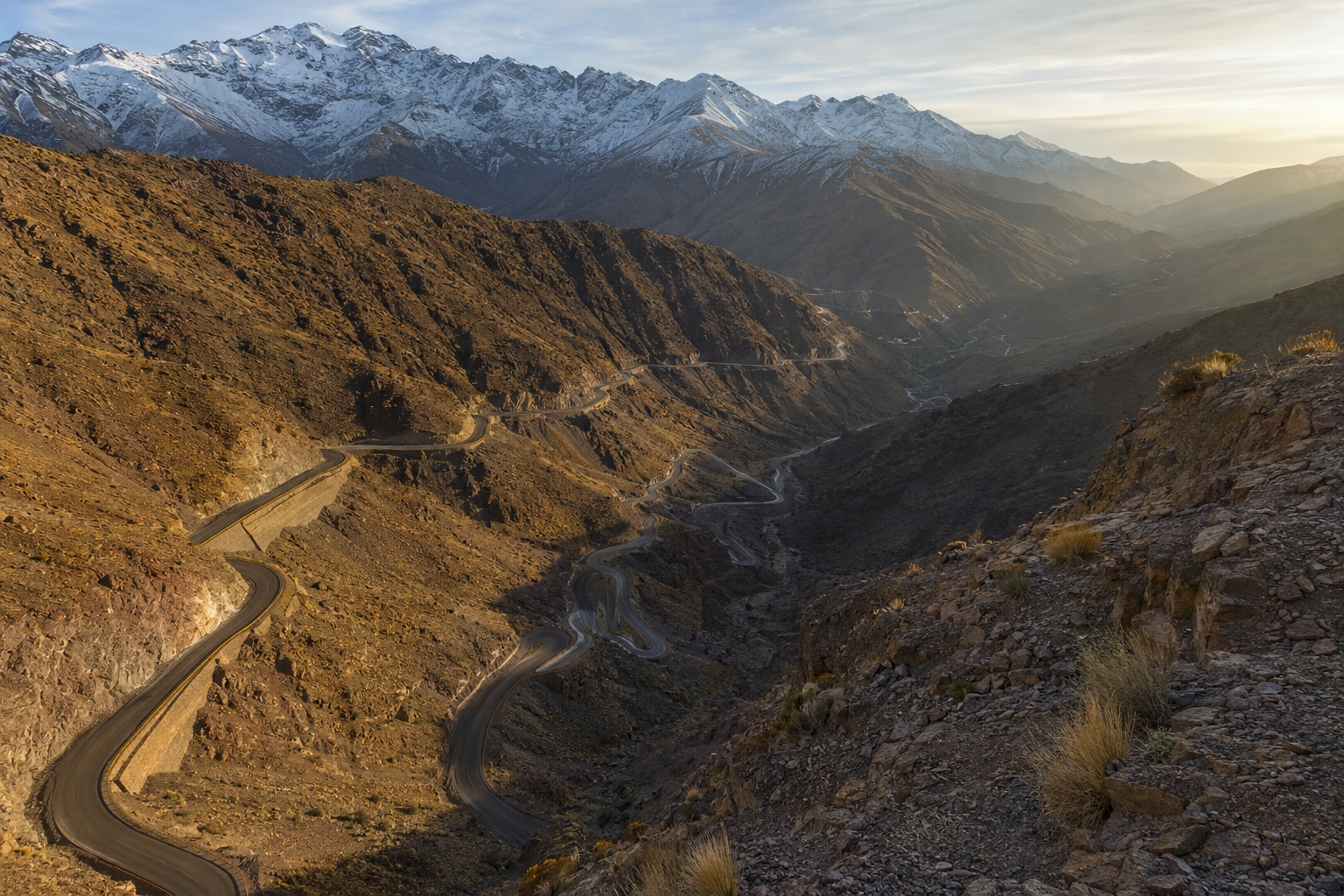
The Anti-Atlas is the range you do not hear about. The High Atlas gets the trekking traffic and the postcards; the Middle Atlas gets the cedar forests and the apes; the Anti-Atlas, slung along Morocco's deep south between the High Atlas and the Sahara, gets ignored. This is a mistake. The Anti-Atlas is one of the strangest landscapes in the country, and the few weeks of the year when it is comfortable to walk in are some of the best walking weeks in Morocco.
I went down for a week in February. Tafraoute, a small town in a granite valley about three and a half hours by road from Agadir, was the base. From there, you can walk somewhere new every morning for a month.
The painted rocks and the deeper geology
Just outside Tafraoute is a famous installation: a stretch of huge granite boulders painted bright blue by the Belgian artist Jean Verame in the 1980s. The work has faded over four decades and now sits as a kind of half-erased pastel rebuke to the rest of the landscape. It is worth a morning. It is not the most interesting thing in the valley.
What is more interesting is what the painted rocks are sitting on. The Anti-Atlas is one of the oldest mountain ranges in the world — the granite is in the order of two billion years old — and what you walk past every day is the eroded core of a range that was once Himalayan in scale. The rocks have the look of something that has been weathered down very, very slowly. The light on them at six in the evening is unlike anything else in Morocco.
The villages
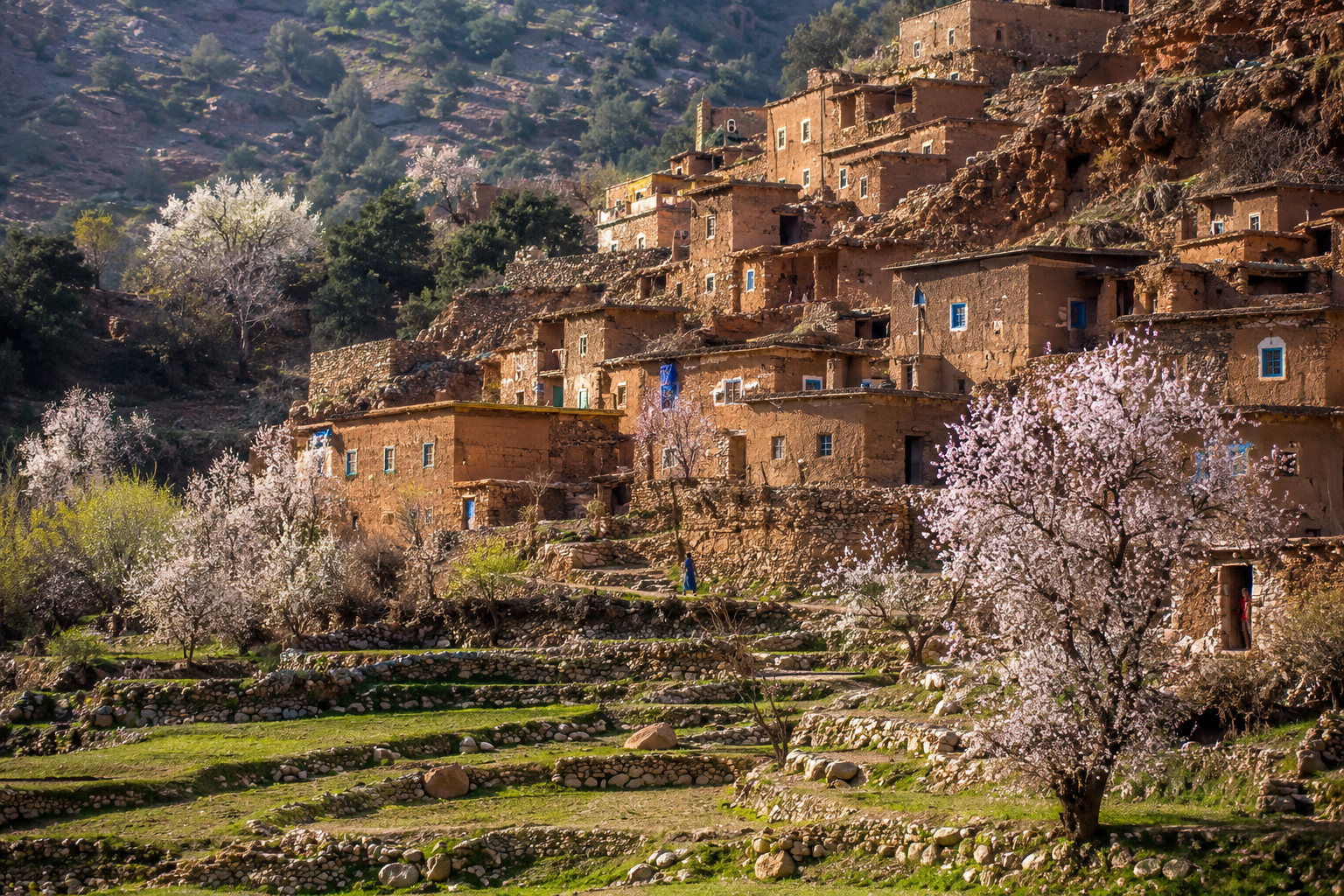
The valley around Tafraoute is dotted with small villages built in pink stone, often clinging to slopes in ways that should not work and have worked for centuries. The villages are mostly inhabited by Berber communities who have farmed the valley terraces for as long as anyone has counted. The terraces are mostly almond. February is almond blossom season — pink and white across the entire valley floor — and it is the reason to come this month rather than any other.
Walk into any of these villages and you will be invited for tea by someone. This is not a tourist gesture. It is, simply, what people do here. The pace of life slows by about forty per cent the moment you sit down. You will leave an hour later having learned more about the village than any guidebook could tell you, and probably less than the family wanted to share.
Practical notes
The best months are February and March, and again October and November. December and January are cold at altitude; April through September is too hot to walk comfortably. There are a handful of small guesthouses in Tafraoute and one or two in the surrounding villages — book ahead during almond blossom, otherwise just turn up.
Bring decent walking shoes, a hat, and patience. The Anti-Atlas does not announce itself. It does not have the dramatic peaks of the High Atlas or the showy dunes of the Sahara. What it has is silence, light, and an unbroken cultural continuity that is genuinely rare in 2026. You walk for a week, you go home, and a year later you find yourself missing it the way you might miss a particular house.