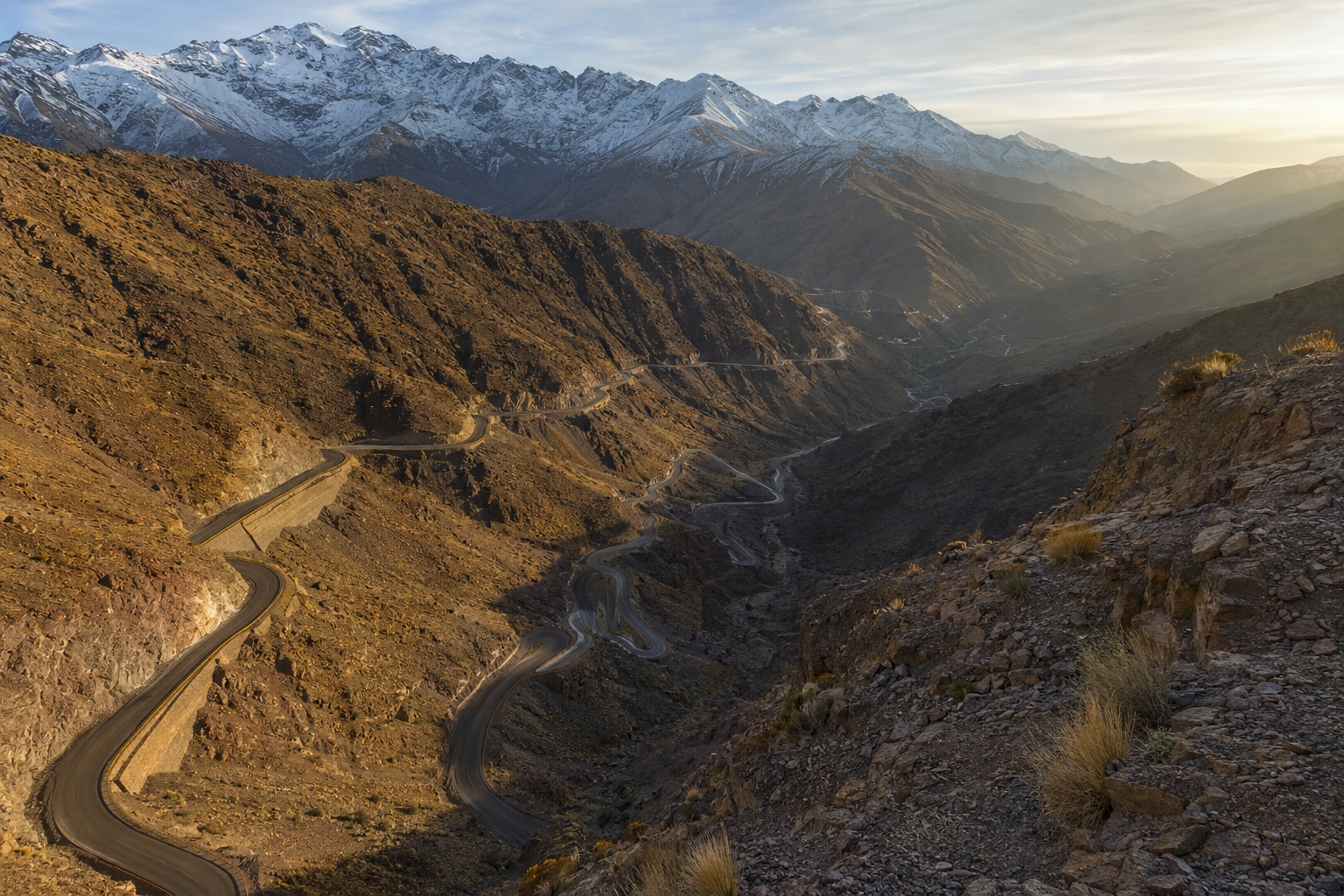
The Tizi n'Tichka is the road from Marrakech to Ouarzazate. It is also, by any reasonable measure, one of the most dramatic stretches of tarmac in North Africa, and it has been quietly upgraded over the past five years into something almost too smooth. The hairpins are still there. The thousand-metre drops are still there. But the road itself is now wide and resurfaced, and what used to be a six-hour ordeal in a clattering Mercedes grand taxi has become, more or less, a four-hour drive.
The improvement is welcome, mostly. The pass still does what it has always done, which is take a road over the High Atlas Mountains at an altitude of 2,260 metres and make sure you remember it.
Leaving Marrakech
The first hour is unremarkable. You leave the city, you pass roadside cafes selling tagines to coach parties, you see the foothills start to rise. Olive groves give way to scrubby holm oak. The light changes. The temperature drops a degree every ten minutes after the first hairpin.
Then, somewhere around the village of Taddert, the road begins to go seriously vertical. This is the section that used to terrify visitors, before the widening project. It is still impressive, just less obviously dangerous. The drivers of the grand taxis still treat it like a Formula One circuit. If you are driving yourself, you are allowed to be slower than them.
The summit
At the top the road levels out briefly and there is a layby with three cafe-stalls and a view that lives up to the build-up. You can see, on a clear day, both sides of the range — the green valleys back toward the Atlantic plain and the dry red country dropping down toward the Sahara. There is usually a man selling fossils. There is usually a wind.
This is the place to stop for fifteen minutes. Drink a sweet mint tea. Walk fifty metres off the road. Listen to how quiet it is when no truck is going through. The Berber villages on the surrounding slopes were here long before the road, and they will be here long after it. The Tizi n'Tichka is the most recent layer of a route that has been used by caravans, by traders, by armies, for at least two thousand years.
Down the south side
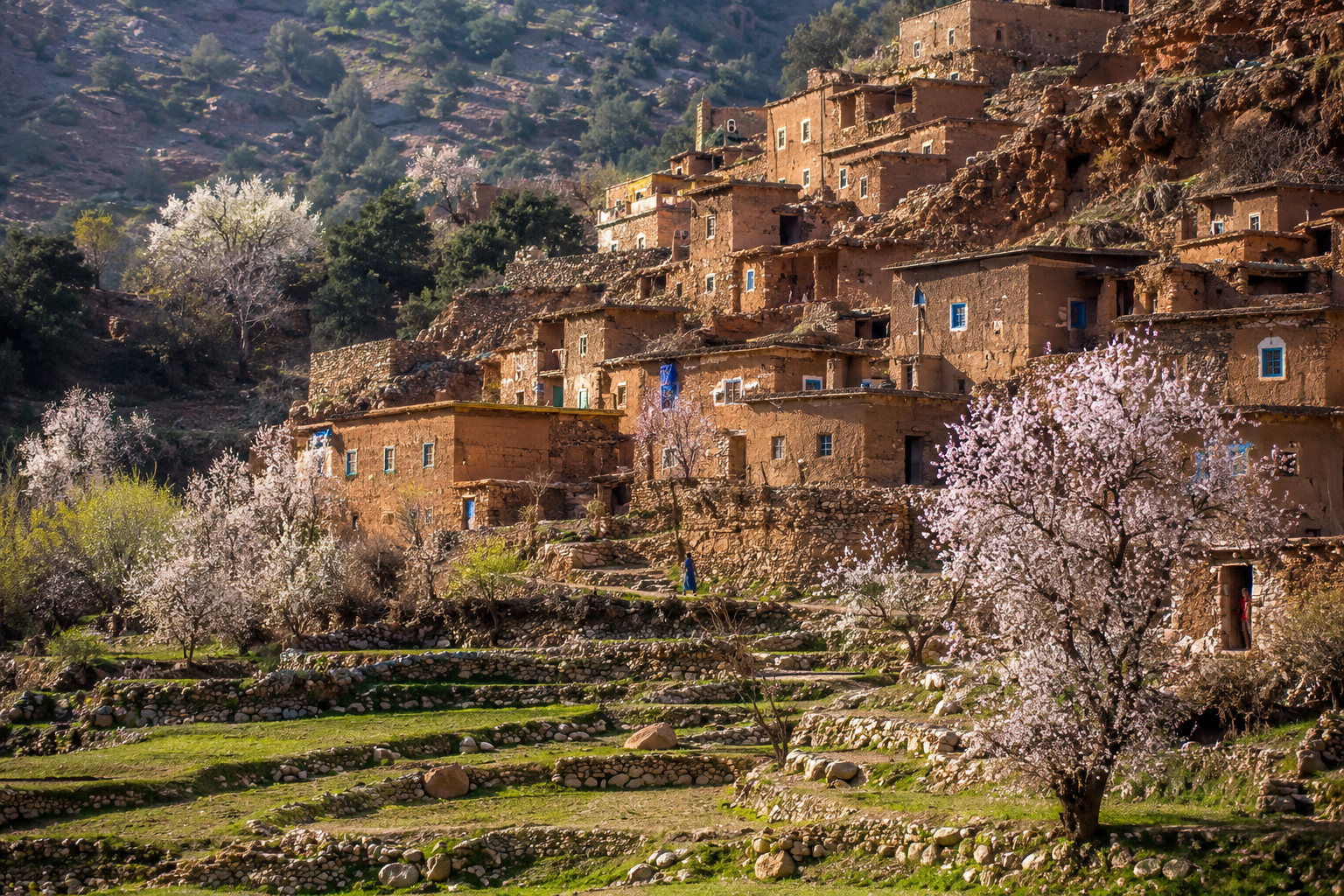
Coming down toward Ouarzazate is the part most travellers undersell. The colour palette flips entirely — from green and grey to ochre, terracotta, dusty rose. The villages change shape too: walled adobe compounds instead of slate-roofed huts. Stop in Ait Ben Haddou if you have not already. The kasbah there is genuinely worth the detour, and you can stay overnight in a small riad in the new village across the river.
The Tizi n'Tichka is not really a destination. It is a hinge. On one side is the Marrakech you know; on the other is the Morocco that fades, very gradually, into the desert. The road is the part of the journey where the country itself changes mind, and the four hours it takes to drive it are exactly the right amount of time to notice that happening.