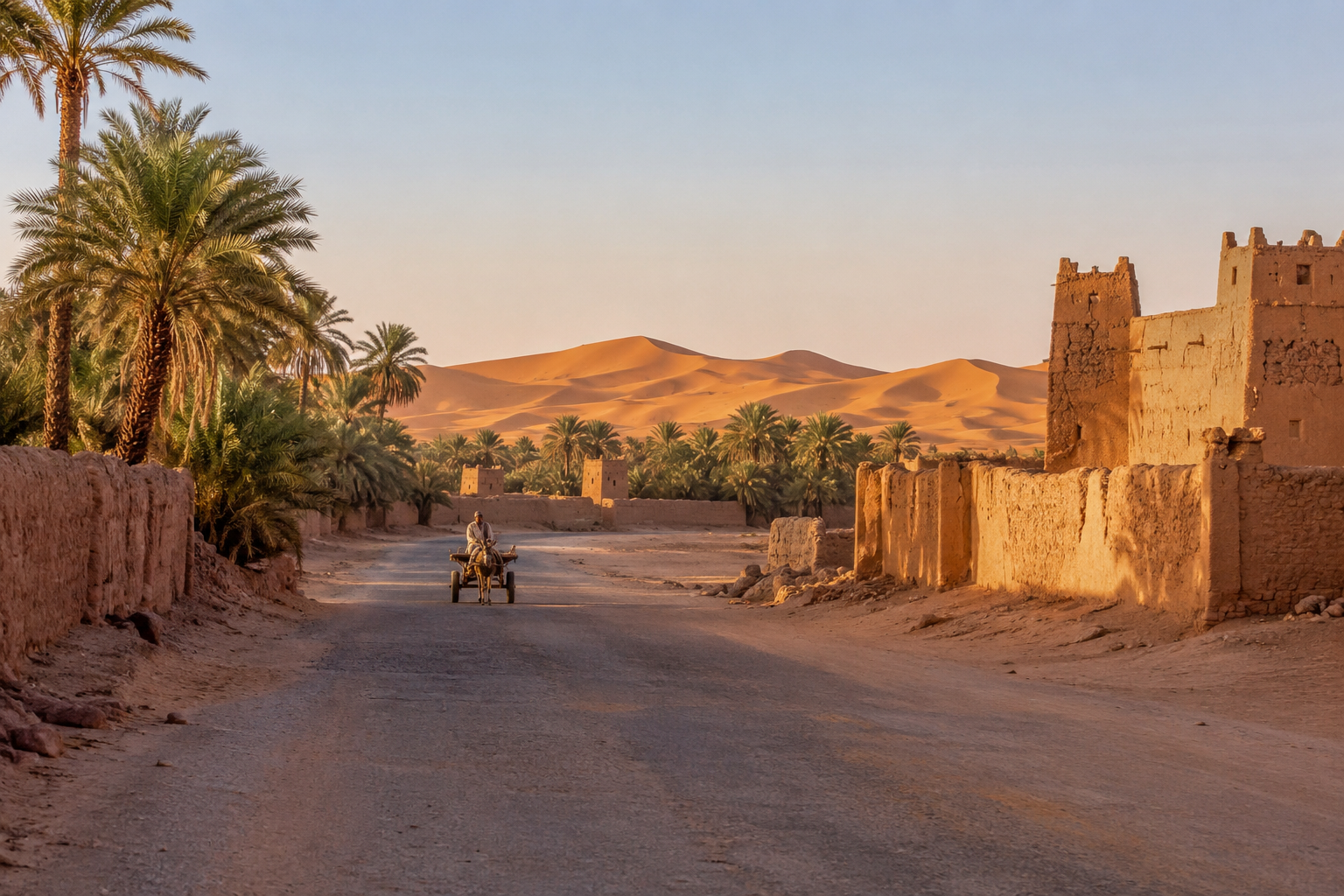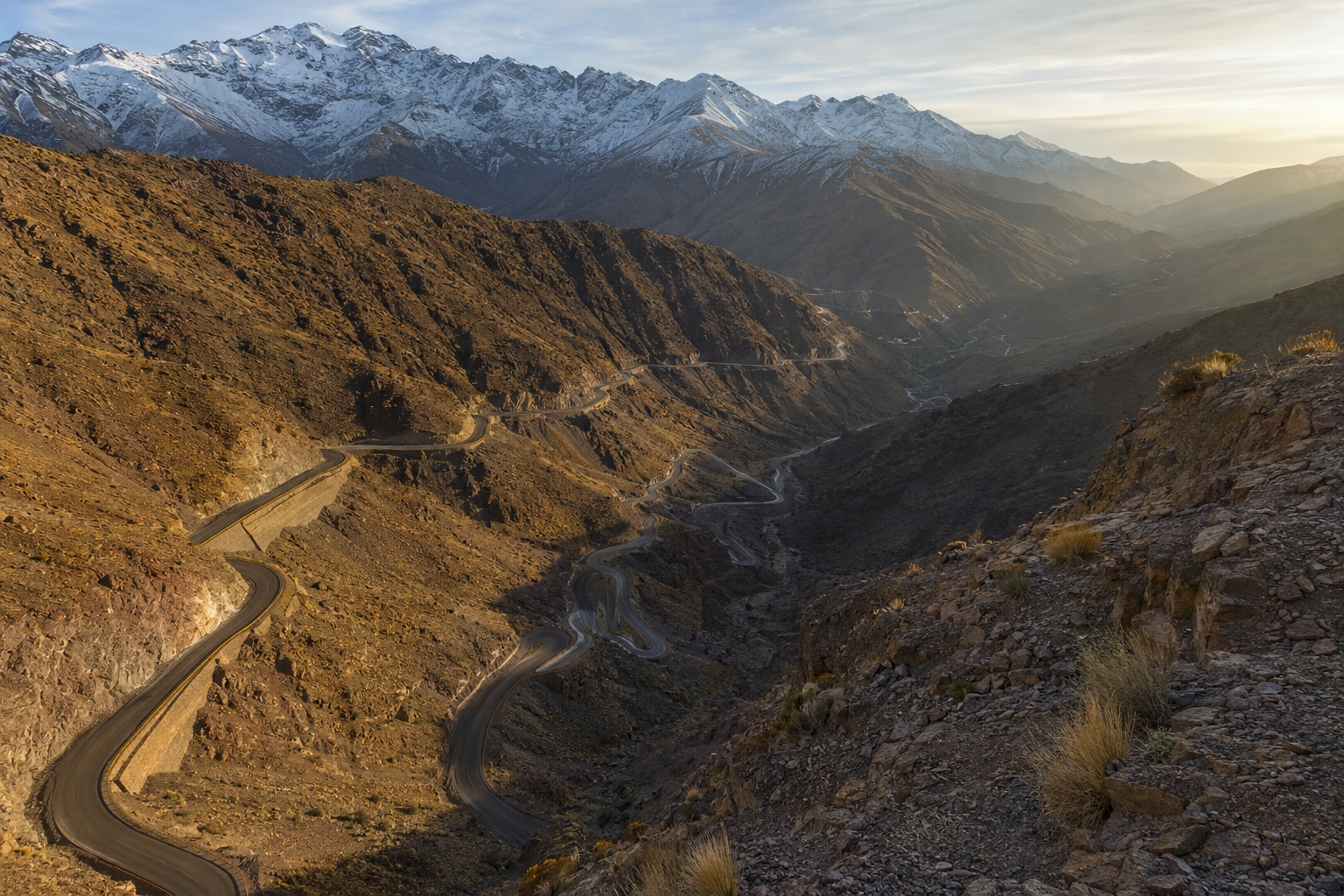
It takes nine hours to drive from Marrakech to the edge of Erg Chebbi, and by the time you arrive in Merzouga you are mostly thinking about a shower. Then the road runs out, the tarmac gives up, and an orange wall about a hundred and fifty metres tall rises up to the east of the village. That is the dune. That is what you came for. The shower will wait.
The Erg Chebbi dune field is small by Saharan standards — roughly twenty kilometres long, eight wide — but it does the job of looking like the desert of the imagination. The sand is the colour of new copper at sunset and grey-white before dawn. Camp light is not the Sahara cliche. It is what most overnight visitors actually experience.
What an overnight camp is actually like
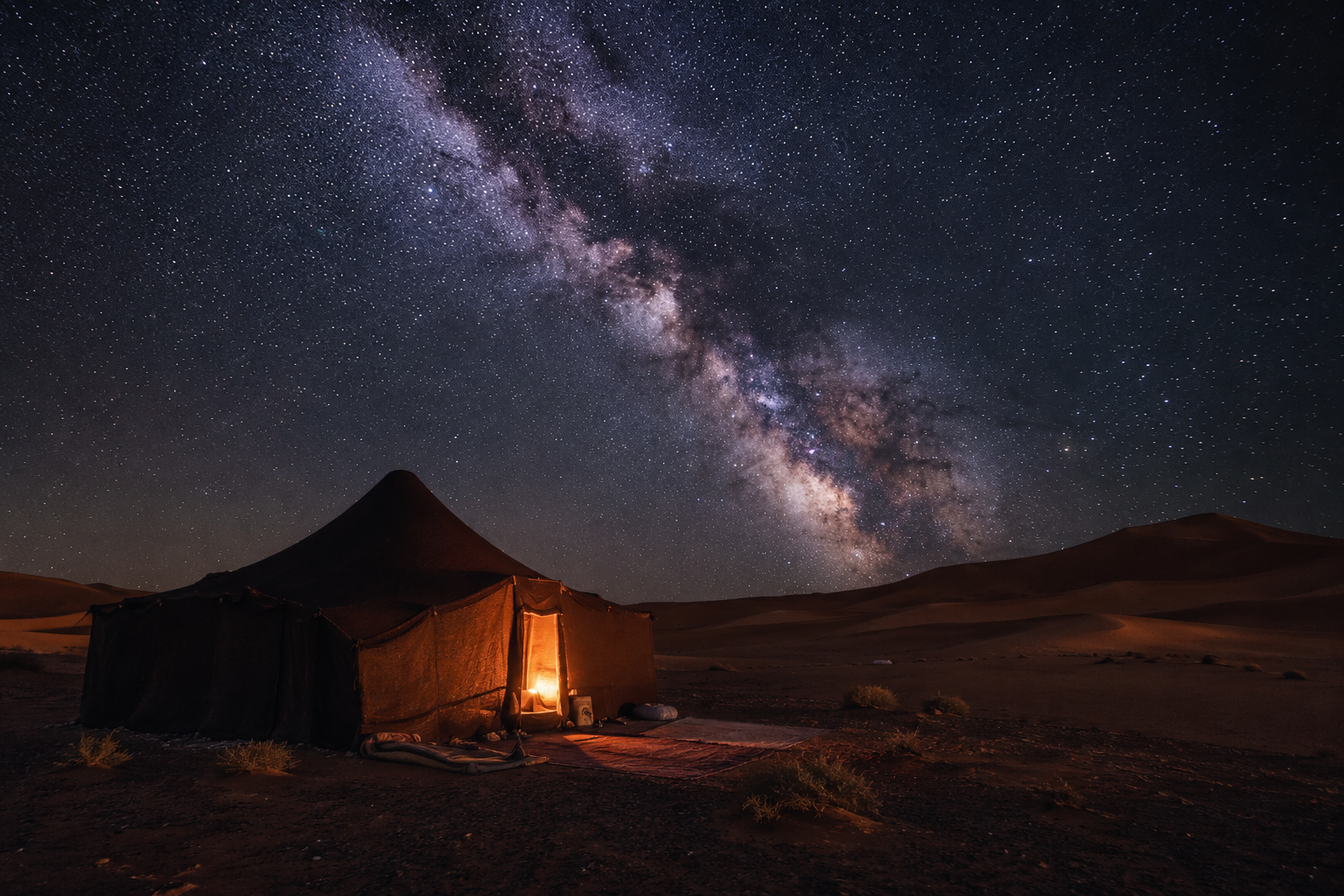
The standard arrangement is this: a 4x4 from Merzouga drops you about thirty minutes into the dunes at a fixed camp, which is a cluster of woven black tents with rugs inside and a central canvas roof for dinner. There are bathrooms. The romantic image of arriving by camel is mostly a tourist add-on now — pleasant for the first kilometre, hard on the back by the fifth.
Dinner is a tagine. There is usually music after — three or four guys with drums, sometimes a single string instrument. Most camps are run by Sahrawi or Berber families who have been doing the same arrangement for decades, and the older guides will, if you ask, tell you about the smuggling routes their grandfathers ran into Algeria when the borders were still soft. This part is not on the website.
The reason to go
The reason to do this is the night. After the last bus leaves and the camp generator clicks off, there is no ambient light for a hundred kilometres. The Milky Way is not a faint smudge. It is a visible structure. You can read by it, theoretically. You can certainly walk by it.
Climb the nearest dune in the small hours. The sand at 3am is cold and faintly damp. From the top you cannot see the camp. You cannot see Merzouga. You cannot really see the ground. You can see, very clearly, that you are on a planet, which is a feeling most people do not have very often.
Practical notes
One night in the dunes is enough for most travellers; two is better. Go in October to April. Summer is genuinely dangerous — 45C is normal and there is no shade. Bring a fleece for the night, even in spring; the temperature drops twenty degrees after sunset. Tip the camp staff in cash, dirhams, not euros.
Erg Chebbi is not unspoiled. It has been on the package-tour circuit since the 1980s. But the dunes do not really know that, and the stars certainly do not, and at three in the morning on top of a dune it is, briefly, exactly the place it is supposed to be.