The first thing Essaouira does is take your hat. The second thing it does is keep it. The Alizee, the constant Atlantic trade wind that defines the town's climate from April through September, is not a breeze. It is a permanent fact. The locals do not bother with hats. They do not really bother with umbrellas either. They have built a town that simply assumes the wind is in the room with you.
This is the easiest thing to dislike about Essaouira on day one, and the easiest thing to love about it by day three. Once you have given up trying to keep your hair flat, the town starts to make sense.
The port
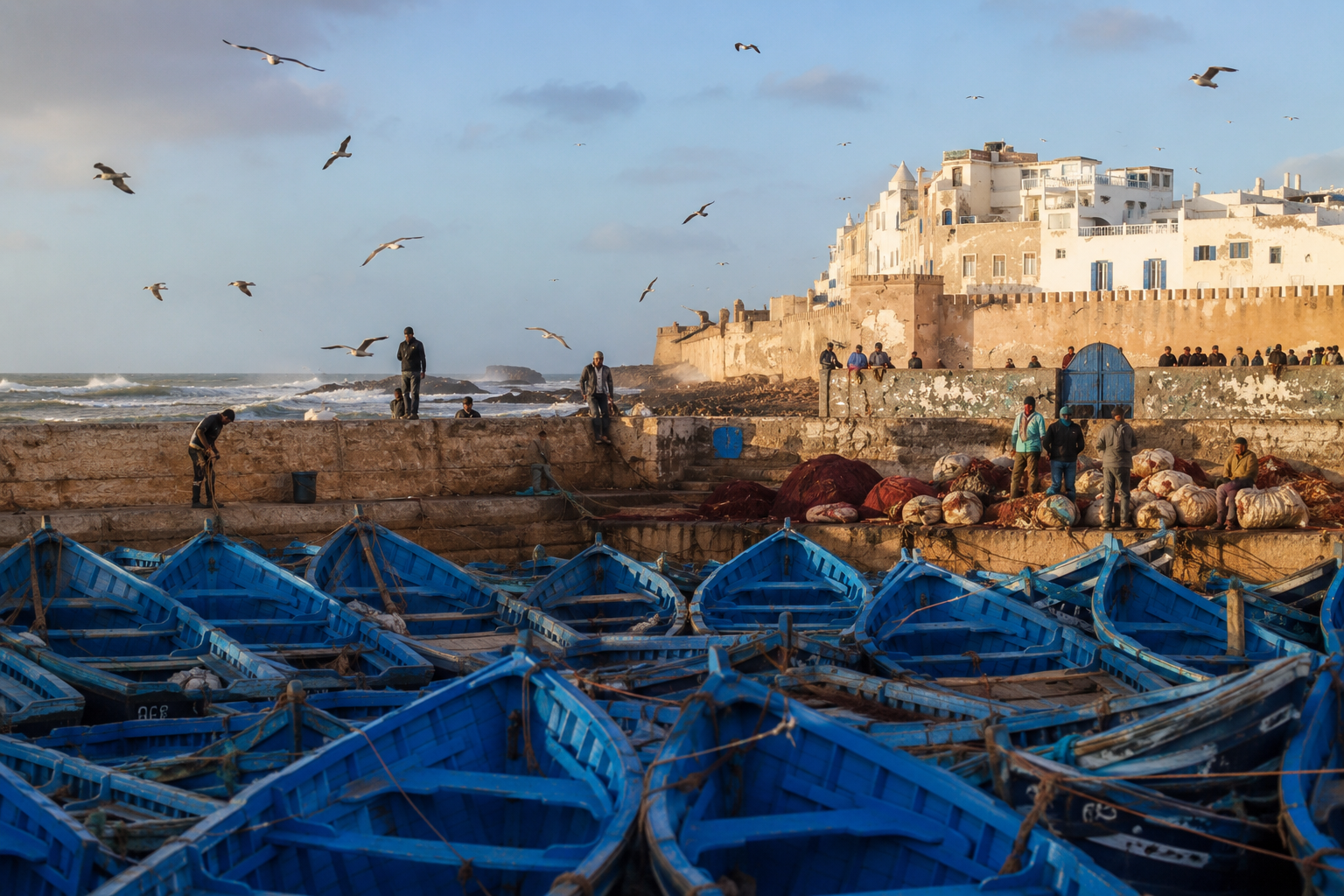
Walk down to the working port in the late morning. The blue wooden boats are the famous photograph. The smell is the part the photographs miss. It is fish, salt, diesel, and tar in some heavy proportion that is rebalanced by the wind every six seconds. The men sitting mending nets are mostly older. The boys hauling crates are mostly younger. The fish in the auction shed are the same sardines, mackerel and conger eel that have come out of these waters for centuries.
You can eat lunch here, at the row of stalls just inside the gate. Pick a fish from the ice, watch them grill it, eat it with bread and a quarter lemon. The price is whatever the laminated card says, and the card is honest. There is no special tourist menu. There is no need for one — the same plate works for everyone.
The medina behind the wall
Essaouira's medina is small, ordered, and uncharacteristically Cartesian by Moroccan standards. The streets actually run mostly in straight lines. You can navigate it without a map within an hour. This is because the city was rebuilt in the late eighteenth century by a French architect on a more or less classical grid. It is the only Moroccan medina you will not get lost in, which is a virtue or a flaw depending on what you came for.
The current town has woodworkers, a strong painters' scene, three or four genuinely good cafes, and a slow drift of remote workers who have figured out that the wifi works and the rent does not insult them. The Gnaoua music festival in June is the biggest event of the year and the town does it well, but the rest of the year is quieter and arguably better for actually being in the place.
The reason Essaouira works
Essaouira's secret is that it is not really trying. Marrakech performs for tourists; Fes performs for itself; Casablanca performs for business; Essaouira performs only for the wind. The town's main industry is still fishing. Its second industry is still craft. Tourism is genuinely a side hustle, and you can feel it.
Stay two nights at minimum. Eat at the port at least once. Walk the ramparts at sunset and lean into the wind so it holds you up. Buy a small piece of thuya wood from someone who turned it themselves. Do not try to keep your hat on. Essaouira is a town that has worked out a relationship with the weather, and the only thing it asks of you is to do the same.