Ten years ago, the riad market in Marrakech looked like it had peaked. Foreign owners had bought up half the medina, prices were climbing, and a wave of guides were warning travellers that the "authentic" riad experience had already vanished into Instagram. The complaint was tidy and a little smug, and like most tidy complaints about a city that has been adapting since the 11th century, it turned out to be wrong.
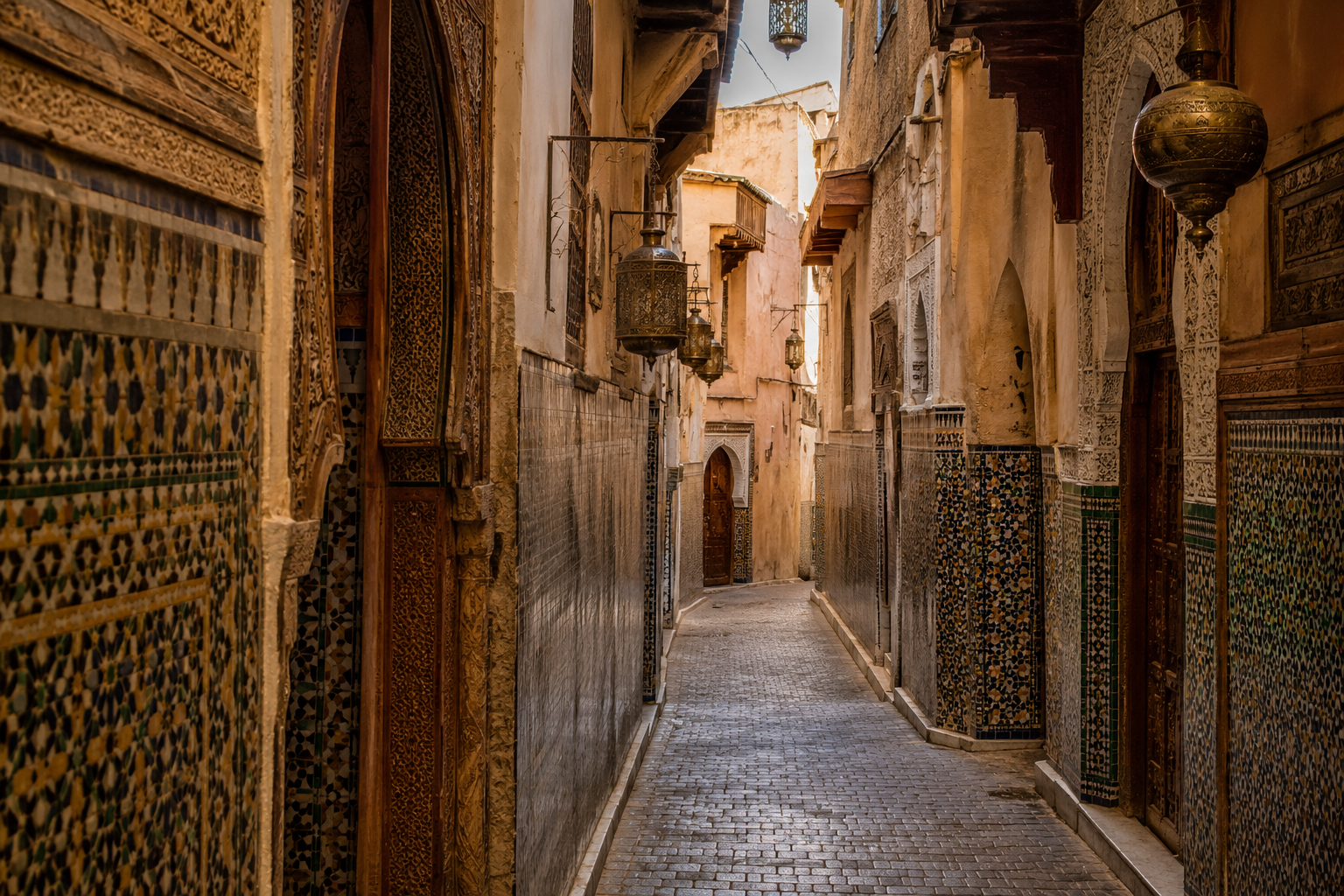
Walk through Derb Dabachi or Sidi Mimoun today and you will find something the headlines missed. The riad model is being quietly reworked, again, and this time the people doing the rebuilding are mostly Moroccan.
Smaller, quieter, more local
The first thing you notice is scale. The riads opening this year are not the eighteen-room compounds that defined the 2010s. They are six rooms, four rooms, sometimes three. Owners speak about not wanting to run a hotel. They want to run a house. The breakfast comes from a woman two doors down. The keys are still big iron things on a leather loop.
Anissa Bennani, who took over a half-derelict riad off Place des Ferblantiers two years ago, told me she does not advertise. Her bookings come through people who have stayed before. "If it gets too busy I close for a month," she said. "That used to be unthinkable. Now it is the point."
The courtyard as the whole idea
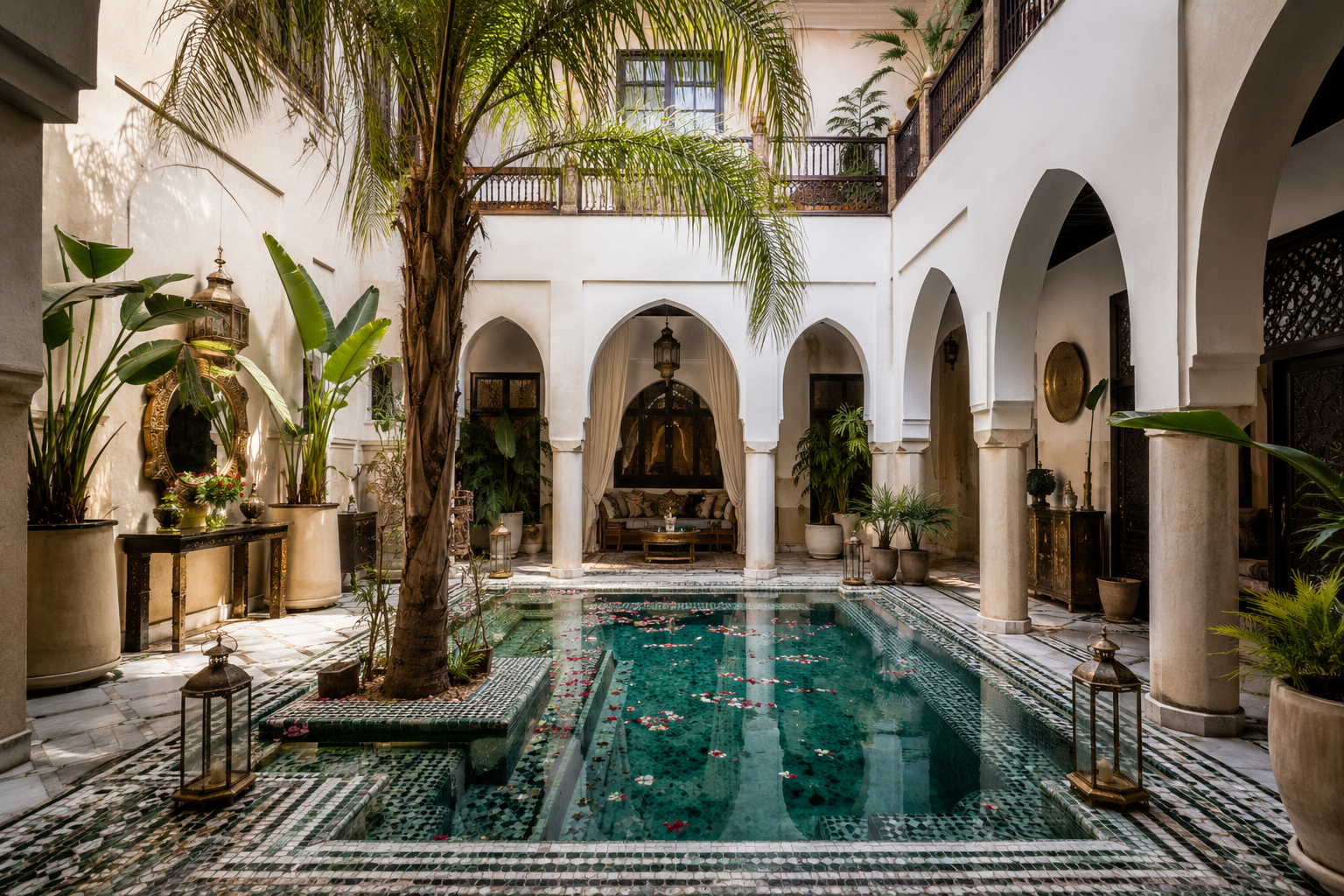
The new owners are also more honest about what a riad actually is. The courtyard is not a feature. It is the building. Everything in the architecture exists to push you back into the centre — the open square of sky, the citrus tree, the worn tiles around the small fountain.
The older boutique generation tended to fight this. They added rooftop bars, glass extensions, mood lighting. The newer owners have stripped most of that back out. You sit in the courtyard. You read. Someone brings mint tea without asking. Nothing else really happens. It turns out this is what people travelling to Marrakech actually wanted in the first place.
Why the revival matters
There is a practical layer underneath all of this. Marrakech has been struggling with overtourism for years, and the medina in particular has felt the pressure. A riad that takes four guests a night, run by someone who lives in the neighbourhood, behaves very differently from a forty-room operation on the same street. The money stays local. The streets stay liveable.
None of this is nostalgia. Several of the most interesting riads I have visited in the past year are openly modern inside — clean lines, contemporary Moroccan ceramics, books in three languages. The point is not to freeze the medina in 1955. The point is to remember what the houses were for.
The riad revival is not a marketing slogan. It is happening one derb at a time, and the people travelling to Morocco for the right reasons are quietly finding it.