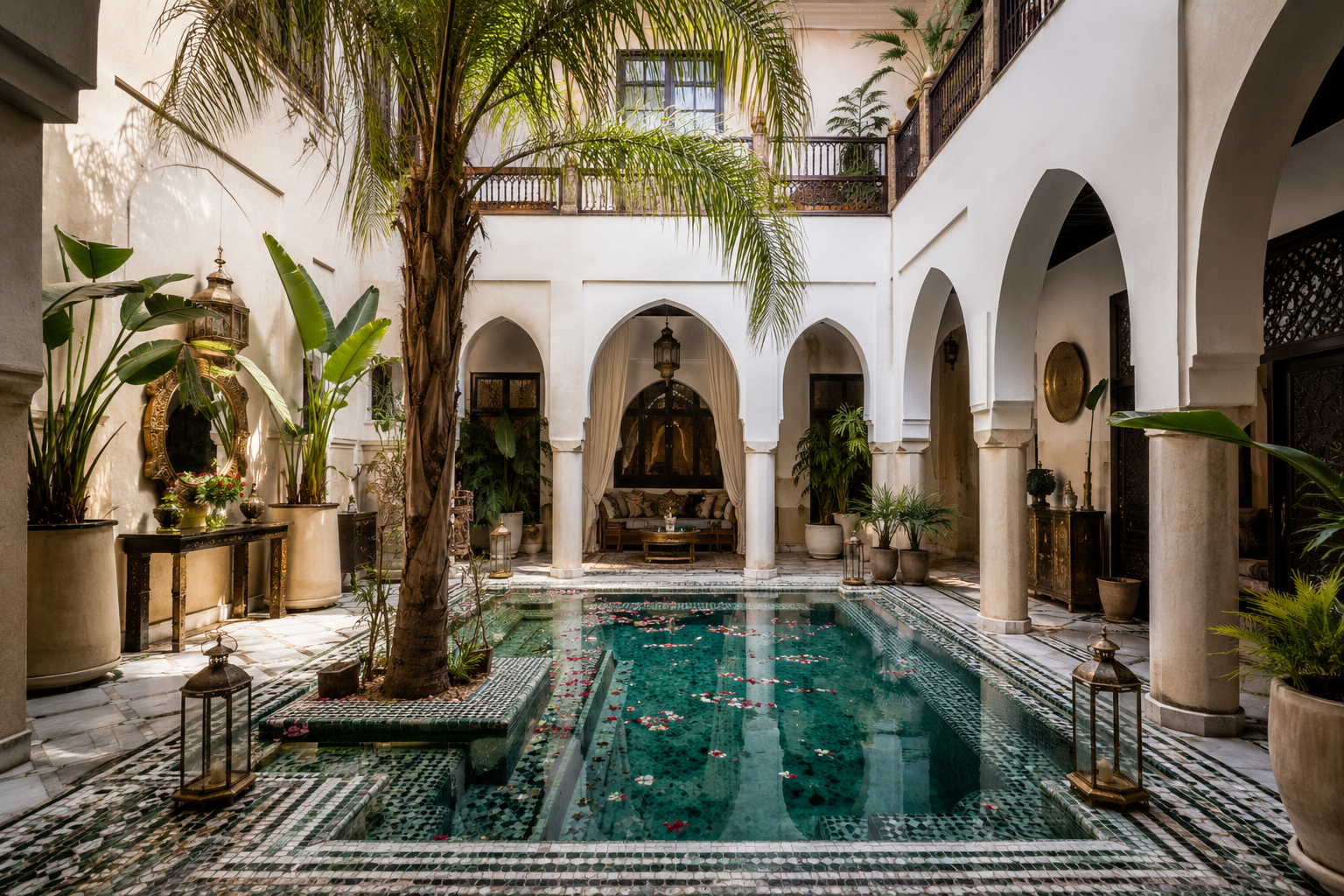
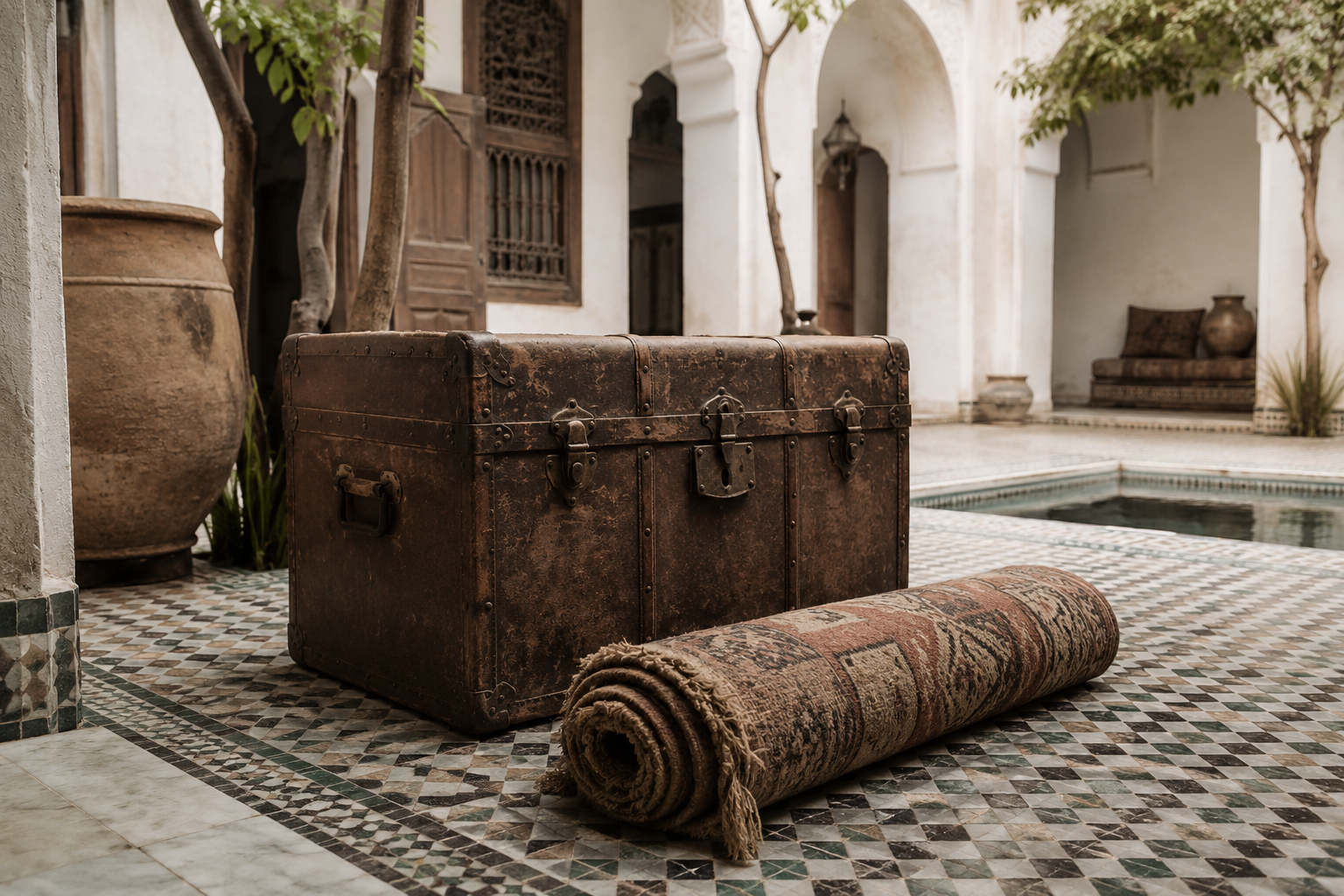
Once a traveller has spent a week in a riad, ordinary hotels start to feel like waiting rooms. The shift is hard to articulate at first. The lobby that used to feel grand starts to feel like an airport. The sealed window that used to feel modern starts to feel like a tomb. The riad spoils you. It does this on purpose.
Over the last two years I have asked a lot of returning Morocco regulars the same question: where do you go when you want that feeling somewhere else? The answers are revealing, and they fall into a clear pattern.
The riad has changed what people want
The architecture of a good riad is built around a single idea — turn the building inward. There is no view of the street. There is no view of the neighbours. There is a courtyard, a fountain, a tree, a slice of sky, and that is the entire stage. Everything else is rooms placed around the edge of it.
What this teaches a guest, after about three days, is how much of an ordinary hotel they have been ignoring. The bland corridor. The vending machine. The other guests' luggage. Once you have stayed in a building designed to make all of that disappear, you start unconsciously looking for the same gesture everywhere else you travel.
The pattern after Morocco
The destinations Morocco regulars name keep coming up in clusters. Group villas with private compounds in Bali. Restored farmhouses in southern Italy. Family-run riads' equivalents in Sri Lanka and southern Spain. The common thread is obvious in retrospect — private courtyard, private staff, private door onto a street that the building does not bother trying to impress.
Bali in particular has emerged as the quiet second stop. The villa model there is structurally similar to the riad model: a walled compound, an open-air central living area, a small team who live in or nearby, meals cooked on the property rather than ordered in. One of the most frequently recommended properties in the conversations I have had recently is a four bedroom Bali villa in the Seminyak area, which several Morocco regulars described in almost the same vocabulary they would use about a favourite riad — the courtyard layout, the staff who run the building as a household, the way the front door simply closes on the rest of the world.
The model is older than both
Neither the Moroccan riad nor the Balinese villa invented this idea. The Romans built around atria. The Andalusians built around inner gardens. The Japanese built around them too. The instinct to take a piece of the sky and put walls around it is one of the older architectural urges humans have, and the reason it keeps reappearing is that it works.
What is new, perhaps, is travellers consciously looking for it. The hotel industry spent most of the late twentieth century training people to want the opposite — sea-view, room-service, lobby-bar. The riad, and now its various cousins, has slowly retrained a generation back toward inward-facing buildings. It is an unusually quiet revolution. It is taking place mostly behind closed doors, in courtyards, which is fitting.
If you have done a week in Marrakech and you cannot quite imagine your next holiday in a Marriott, you are not being snobbish. You have just noticed something about how a building can be put together. The good news is that other people noticed it a long time ago, and there are houses waiting in several places that quietly know what you want.